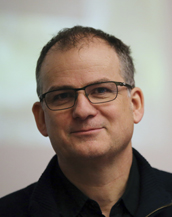
Bruno Lemaitre
Bruno Lemaitre, who holds a Ph.D. in genetics, completed his dissertation under the supervision of Dario Coen at Pierre and Marie Curie University (Paris) on the transposition of the P element in Drosophila. He then joined Jules Hoffmann’s laboratory (CNRS, Strasbourg) as a research fellow, where he began a genetic analysis of the antimicrobial response in Drosophila. One of his early studies demonstrated that the Toll receptor and its activation cascade are essential components of the immune response in this fly (Lemaitre et al. (1996), Cell 86:973). This was pioneering work in the field of innate immunity, which subsequently led to the identification of Toll-like receptors as crucial mediators of innate immunity in humans. In 1998, Bruno Lemaitre established his own research group at the CNRS Center for Molecular Genetics in Gif-sur-Yvette, and since 2007 he has been a professor at the École Polytechnique Fédérale de Lausanne (EPFL). His laboratory uses Drosophila as a model organism for research in the field of innate immunity and host-pathogen interactions.
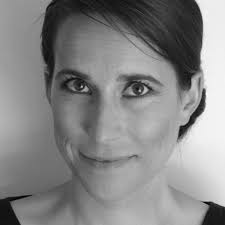
Claudine Neyen
Claudine Neyen, who holds a Ph.D. in immunology, completed her dissertation under the supervision of Siamon Gordon at the University of Oxford, focusing on macrophages and their innate immune receptors. At Oxford, she taught innate immunity at the undergraduate level. After completing her dissertation, she joined Bruno Lemaitre’s group at EPFL to study host-pathogen interactions in fruit flies, and notably discovered a mechanism that allows the innate immune system to distinguish between live, dangerous bacteria and dead, harmless bacteria. From 2015 to 2020, Claudine Neyen taught scientific writing at the University of Basel. From 2020 to 2024, she served as program coordinator at the Doctoral School of Life Sciences, and since 2024, Claudine has been program coordinator at the School of Translational Medicine, Faculty of Medicine, Mannheim.
Adrian Duval
Adrian studied medicine at the University of Lausanne (UNIL) and is currently pursuing an MD-PhD in molecular biology. His work analyzes the effects of short-term fasting on targeted cancer therapies, such as tyrosine kinase inhibitors. In addition to his work in the lab, Adrian has developed a strong interest in teaching medicine and biology. He works for the Faculty of Biology and Medicine (FBM) at the University of Lausanne as a coordinator of practical exercises and exams for medical students and collaborates with Prof. Lemaître at EPFL to develop a MOOC on the principles and mechanisms of immunity and their medical applications.
Frequently Asked Questions